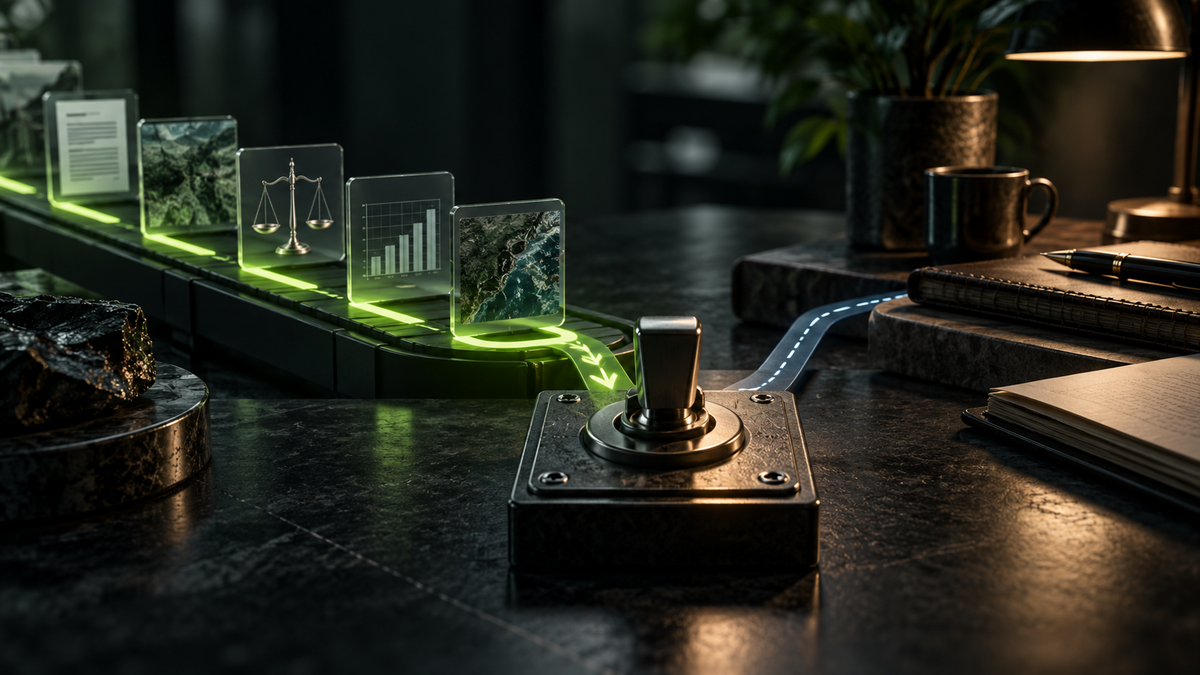
Rough notes are often a mixture of facts, half-decisions, questions and things you meant to remember. Asking AI to "tidy these up" may produce a neat summary while quietly joining ideas that were never connected.
The better approach is to sort the notes before asking for polished writing.
Where does this note belong?
Could launch in October
Unconfirmed idea, unless the notes show a decision.
Sam will send the draft by Friday
Action, owner and date, subject to checking the source wording.
Need to confirm the price
Open question or missing information.
Tell AI where the notes came from
Notes from a meeting need different treatment from thoughts captured during a walk. Explain the setting, who the output is for and what you need next.
If the notes contain abbreviations or uncertain wording, say so. Do not let AI guess what an unfamiliar name or shorthand means.
Sort before you rewrite
Ask the AI to place each item under a useful label:
- Confirmed facts.
- Decisions already made.
- Actions and possible owners.
- Open questions.
- Ideas that have not been agreed.
- Items that are unclear.
This separation protects the difference between "we will" and "we could".
Use a two-stage prompt
These are rough notes from [situation]. First, organise them into confirmed facts, decisions, actions, questions and unconfirmed ideas. Keep uncertain wording visible and do not invent owners or dates. Ask me about anything that changes the meaning. After I answer, create [the required output] for [audience].
The pause matters. It gives you a chance to correct the structure before the AI turns it into a convincing final document.
Give actions enough detail
An action needs a clear job, an owner and a date when those are known. Do not accept invented owners or convenient deadlines.
If either is missing, mark it "owner needed" or "date to confirm". Visible gaps are more useful than false completeness.
Keep the original notes
Do not replace the raw notes with the AI version. Save both.
The organised version is easier to use, but the original preserves wording and context that may matter later. If someone questions a decision, you need to know whether it appeared in the source or only in the summary.
Choose the output after the sorting
The same notes might become meeting actions, a short email, a project update or a list of questions. Decide after you can see what the notes actually contain.
One large output that tries to do everything is usually less useful than a clear action list followed by a separate message.
Nova 9 view
Do not ask AI to polish confusion.
Separate facts, decisions, actions and ideas first. Once that structure is right, the final writing becomes much easier to trust.
Sources and last checked
- OpenAI, File Uploads FAQ: https://help.openai.com/en/articles/8555545-file-uploads-faq
- Microsoft, Add content to Copilot Chat prompts: https://support.microsoft.com/en-us/microsoft-365-copilot/add-content-to-microsoft-365-copilot-chat-prompts
- Last checked: 14 September 2026